Wednesday's Summary
This briefing analyzes the most important news stories from the previous 24 hours, ending March 31, 2026, offering a neutral overview of the narratives dominating political discourse.
Where the Narratives Split
The announcement of President Trump's 'Address to the Nation' on Iran and his assertion that a formal deal with Iran is not a prerequisite for ending military operations were widely reported across the political spectrum, establishing these as high-consensus factual developments.
However, the framing and emphasis surrounding the Iran conflict diverged significantly. Left-leaning outlets heavily concentrated on what they characterized as President Trump's inconsistent statements and "flip-flops" regarding the war's duration and objectives, highlighting the gap between presidential pronouncements and the ongoing military reality of the five-week conflict and substantial troop presence. These reports frequently characterized the situation as the President being "bored" or "done" with the war, implying a potentially chaotic or ill-defined exit strategy. In contrast, right-leaning outlets focused more on the strategic aspects of the conflict's conclusion, particularly President Trump's stated goal of neutralizing Iran's nuclear weapon capability as the metric for ending military operations, and posed questions about the viability of declaring victory as a resolution.
Another notable divergence appeared in the coverage of the federal judge's ruling to block the defunding of NPR and PBS. This story, deemed "High Consensus," was prominently featured by outlets like The New Republic, which characterized it as a "massive blow to Trump" and a victory for the First Amendment against viewpoint discrimination. The detailed reporting underscored the impact of the executive order, including layoffs and the closure of the Corporation for Public Broadcasting. While classified as high-consensus, this specific legal development did not appear among the top "viral" stories reported by right-leaning outlets, suggesting a difference in editorial prioritization of this particular legal and media-related news item within their leading narratives.

President Trump announces an 'Address to the Nation' on Iran
President Donald Trump will give an 'Address to the Nation' on Iran on Wednesday night.
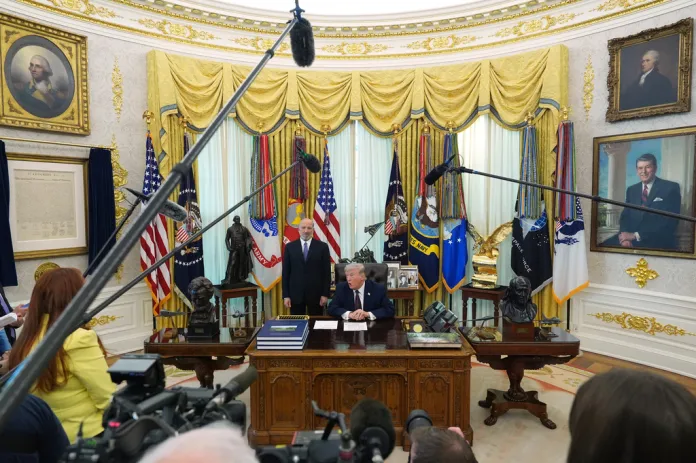
Trump says Iran doesn’t have to make a deal for war to end
President Donald Trump said on Tuesday that Iran does not have to make a deal with him for the war to end, stating that military operations against the country will cease when the United States feels that Iran can no longer build a nuclear weapon. “No, they don’t have to make a deal with me,” […]
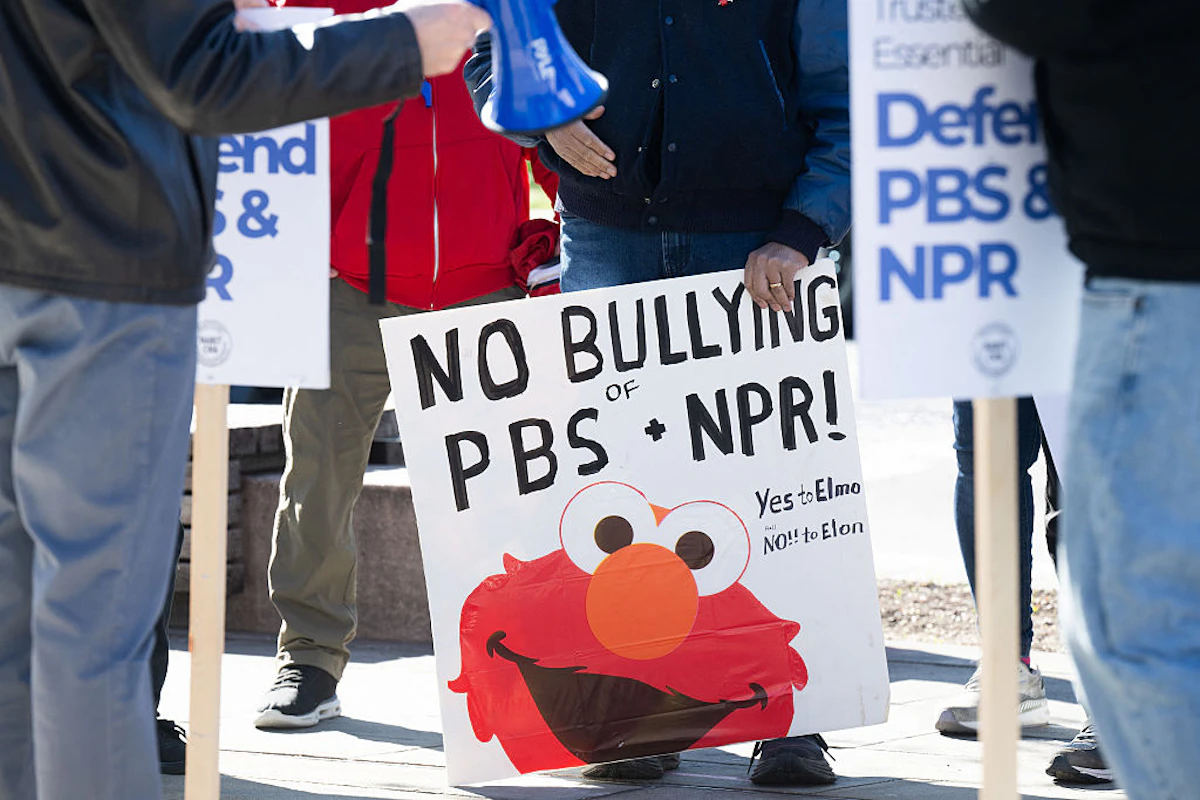
Federal Judge Saves NPR and PBS, Delivers Massive Blow to Trump
A federal judge on Tuesday blocked the Trump administration from defunding National Public Radio and the Public Broadcasting Service. U.S. District Judge Randolph Moss ruled that President Trump’s executive order last May to end federal funding for the two public broadcasting networks is illegal and unenforceable, saying that the First Amendment to the Constitution “does not tolerate viewpoint discrimination and retaliation of this type.”“It is difficult to conceive of clearer evidence that a government action is targeted at viewpoints that the President does not like and seeks to squelch,” Moss, who was appointed to the Washington, D.C., circuit by President Obama, wrote in his ruling. Trump and his fellow Republicans have long railed against PBS and NPR for what they perceive as bias towards liberals and Democrats. That’s not enough for the president to deny them federal funding, Moss said, because there is no legal precedent for it. “The Federal Defendants fail to cite a single case in which a court has ever upheld a statute or executive action that bars a particular person or entity from participating in any federally funded activity based on that person or entity’s past speech,” Moss wrote. “The First Amendment does not tolerate viewpoint discrimination and retaliation of this type.” The heads of NPR (which sued the Trump administration last May) and PBS celebrated the decision. “Public media exists to serve the public interest — that of Americans — not that of any political agenda or elected official,” NPR’s president and CEO Katherine Maher said to the Associated Press. PBS President and CEO Paula Kerger, called the executive order “textbook” viewpoint discrimination and retaliation. “At PBS, we will continue to do what we’ve always done: serve our mission to educate and inspire all Americans as the nation’s most trusted media institution,” Kerger said. Trump’s executive order cut off millions of dollars for PBS’s children’s programming from the Department of Education, resulting in layoffs for one-third of PBS Kids employees. The Corporation for Public Broadcasting, which oversaw the federal funding for PBS and NPR, was forced to close after Congress eliminated federal appropriations for the public outlets. The Trump administration will likely appeal the ruling, and it’s not clear how or if Congress will resume funding for PBS and NPR. Smaller and more rural communities with fewer news outlets were hit the hardest by the loss of public funding, as comedian John Oliver pointed out on HBO’s Last Week Tonight in November. Arkansas PBS even briefly considered ending its affiliation with the national PBS organization. Hopefully, this court ruling will spur a much-needed revival of public media funding in the U.S. This story has been updated.
Left-Leaning Media's Perspective
- President Trump's public statements regarding the Iran conflict were a dominant topic, particularly his declaration that the U.S. would be out of Iran within two to three weeks and the announcement of an upcoming address to the nation.
- Extensive coverage highlighted what was perceived as inconsistent messaging from the President on the Iran war's endgame, noting twelve instances of varied pronouncements about its conclusion despite the conflict entering its fifth week with significant troop deployment.
- Reports suggested President Trump was growing "bored" with the Iran war, telling aides he was "done" with it and urging European nations to handle the Strait of Hormuz themselves, drawing criticism regarding the handling of the conflict's resolution.

Trump Says U.S. Will Be Out of Iran Within Two to Three Weeks
The White House said the president would address the nation about Iran on Wednesday evening.
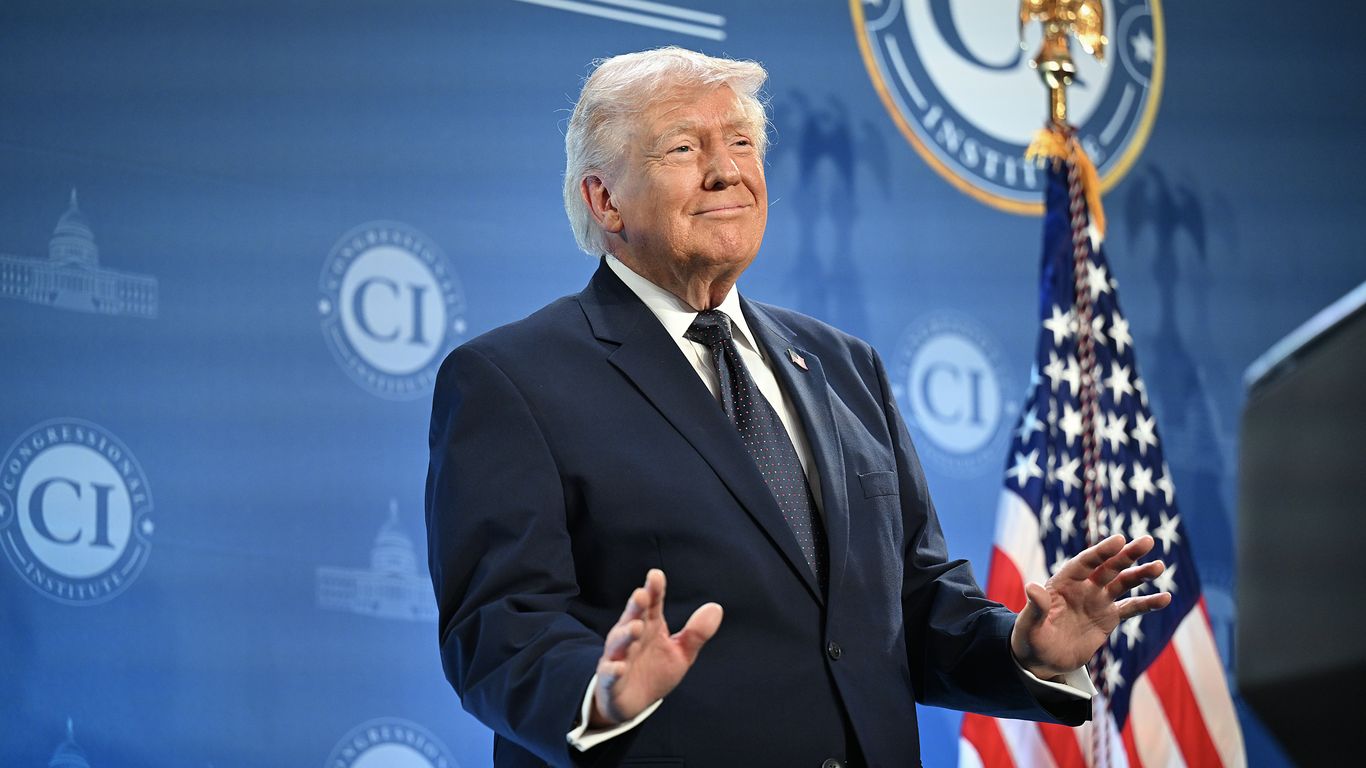
12 times Trump signaled the Iran war was about to end
President Trump hinted Monday that the Iran war may be over soon — the latest in a series of occasions he has teased that the conflict might end.Why it matters: Trump's messaging on the Iran war's endgame is all over the map as he attempts to make his case to the American people that the conflict will not lead to prolonged war.Reality check: The U.S. is currently in its fifth week of the Iran war, running up against Trump's original timeline of four to five weeks.The U.S. has sent 50,000 troops to the Middle East as a part of the ongoing conflict, with no immediate end in sight.Though the White House had stopped short of signaling troops on the ground, taking over Kharg Island or storming into Iran to take uranium have been suggested by multiple reports.What they're saying: The White House pointed to comments made by officials when reached for comment."We are very close to meeting the core objectives of Operation Epic Fury and this military mission continues unabated," White House press secretary Karoline Leavitt said on March 25.Secretary of State Marco Rubio said Monday on "ABC Good Morning" that all "objectives are being met ahead – on or ahead of schedule and should be able to achieve in a matter of weeks."Here are 12 times Trump's mentioned the war's end.1. President Trump threatened in a Monday Truth Social post to "obliterate" Iran's energy and water infrastructure if a deal to end the war isn't reached.If "the Hormuz Strait is not immediately 'Open for Business' we will conclude our lovely 'stay' in Iran" by attacking those plants," he said. Screenshot: President Trump/Truth Social2. Trump said at a Cabinet meeting on March 26: "They're defeated, they can't make a comeback."3. Trump claimed on March 24 that the war was already over and that Iran would go through a regime change. "We've won this war. This war has been won," he told reporters.4. Trump hinted at an Iran war peace deal on March 23 in an all-caps Truth Social post, saying the U.S. and Iran had "VERY GOOD AND PRODUCTIVE CONVERSATIONS" over a peace deal. If a deal wasn't made, Trump told reporters, "we'll just keep bombing our little hearts out."5. Trump suggested in an interview on March 13 with Fox News that the war would end when "I feel it in my bones," but he didn't "think it's going to be long when it's over."6. Trump offered a candid assessment of the war on March 12: "They are pretty much at the end of the line. It doesn't mean we are going to end it immediately — it is only a question of when."7. President Trump told Axios on March 11 that the war with Iran will end "soon" because there is "practically nothing left to target." He said the war will end "any time I want it to end."8. The same day, Trump told a crowd: "You never like to say too early you won. We won. In the first hour it was over." Minutes later, he added: "We don't want to leave early, do we? We gotta finish the job, right?"9. Trump hinted that the U.S. already won the war during a speech at the Republican Issues Conference on March 9. "We've already won in many ways, but we haven't won enough," he said. "We go forward more determined than ever to achieve ultimate victory that will end this long-running danger once and for all."10. Trump said on March 9 that the Iran war will be over "very soon" and that Iran is "all gone. We could call it a tremendous success right now."Q: "How long should Americans be prepared for this war to last for?" President Trump: "The big risk on that war has been over for three days…The rest is going to be a determination as to my attitude, as well as the people in the Trump administration." pic.twitter.com/8dVjp6eDTe— CSPAN (@cspan) March 9, 2026 11. Trump touted success again in a March 2 press conference to award the Medal of Honor to three U.S. soldiers. "We will easily prevail. ... Whatever it takes," he said.12. Trump said the operation was an unmitigated success in an interview with ABC News on March 2 — just days after the war began. "Nobody else could have done this but me, and you know that," he said.President Trump: 🇺🇸“We have the strongest and most powerful, by far, military in the world, and we will easily prevail.”“We’re already substantially ahead of our time projections. We projected four to five weeks. But we have the capability to go far longer than that. We’ll do… pic.twitter.com/sDbsJAQGen— Donald J Trump Posts TruthSocial (@TruthTrumpPost) March 3, 2026 Go deeper: Trump says he won't call Iran conflict a war. He keeps doing it anyway.

Trump tells aides he’s done with Iran: WSJ
Reports last week revealed that President Donald Trump was growing "bored" with his war in Iran and now he's telling aides he's over it. The notoriously distractible president posted on Truth Social Tuesday morning that if Europe, specifically NATO countries, want to buy oil from Iran, then they should deal with the Strait of Hormuz themselves. He blamed other countries for not getting involved in his war. “Build up some delayed courage, go to the Strait, and just TAKE IT," Trump wrote. "You’ll have to start learning how to fight for yourself, the U.S.A. won’t be there to help you anymore, just like you weren’t there for us,” Trump posted on his Truth Social network. “Iran has been, essentially, decimated. The hard part is done. Go get your own oil!”Critics responded by characterizing Trump as going to war, bungling it and then leaving a mess."Getting the Strait closed because of the war you launched and then telling other countries they are gonna have to figure out how to open it is like buying a casino, bankrupting it, then putting it on the other board members to lend you the money to pay back the bank," said The Bulwark's Sam Stein.Now, The Wall Street Journal is reporting that Trump is telling his aides to finish things up and withdraw everything. It comes mere days after hundreds of special operations forces were sent to Iran, prepared for a mission in which they'd be sent into Iran to retrieve the enriched uranium Trump says Iran has. He previously sent thousands of troops, largely Marines, to wait off the coast of Iran and prepare for a ground war. The Journal cited administration officials saying that Trump "decided that the U.S. should achieve its main goals of hobbling Iran’s navy and its missile stocks and wind down current hostilities while pressuring Tehran diplomatically to resume the free flow of trade. If that fails, Washington would press allies in Europe and the Gulf to take the lead on reopening the strait."It's another flip-flop on Trump's plans that seem to change multiple times a day depending on who he's speaking to. The Journal described the constant 180-degree turns, saying, "Trump’s desire to end the war quickly is at odds with other moves he is planning to make."
Right-Leaning Media's Perspective
- News of President Trump's upcoming 'Address to the Nation' concerning Iran was a key focus, signaling a significant update on the ongoing military operations.
- Reports emphasized President Trump's statement that Iran does not necessarily need to agree to a deal for the war to end, clarifying that military operations would cease once the U.S. determines Iran can no longer develop a nuclear weapon.
- Discussion points included the strategic question of whether President Trump might declare victory in Iran to conclude the five-week-long conflict, acknowledging challenges for a swift resolution.
Trump says Iran doesn’t have to make a deal for war to end
President Donald Trump said on Tuesday that Iran does not have to make a deal with him for the war to end, stating that military operations against the country will cease when the United States feels that Iran can no longer build a nuclear weapon. “No, they don’t have to make a deal with me,” […]
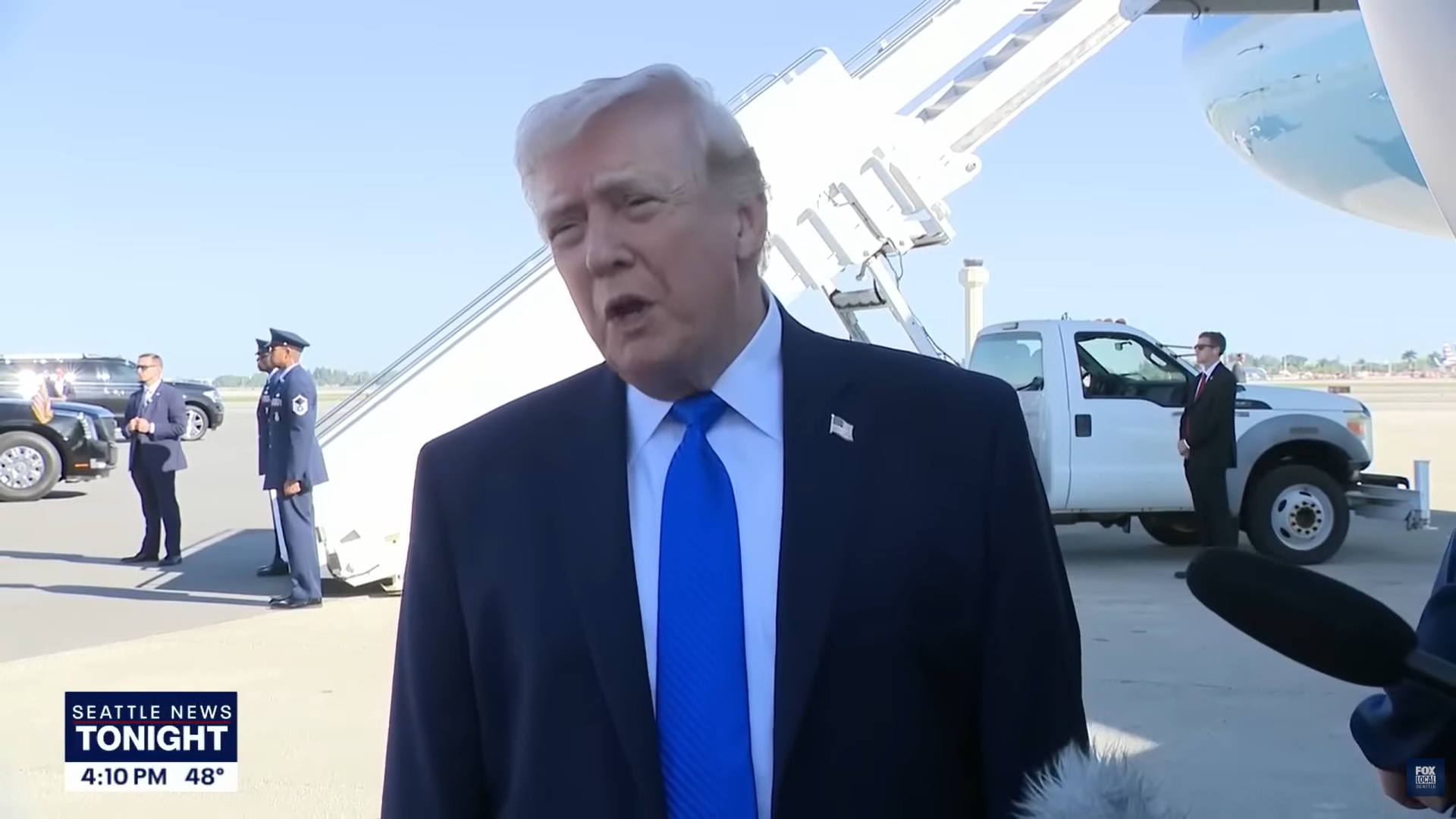
Should Trump Just Declare Victory In Iran And End The War?
As the war with Iran enters its fifth week, President Trump has no good options for winning quickly.
President Trump announces an 'Address to the Nation' on Iran
President Donald Trump will give an 'Address to the Nation' on Iran on Wednesday night.