Thursday's Summary
The ongoing situation in Iran dominated headlines, particularly concerning the war's objectives, its economic repercussions on global oil prices, and the strategic challenges faced by the Trump administration.
Where the Narratives Split
Both sides heavily reported on the ongoing war in Iran and its various ramifications, particularly the critical impact on global oil prices due to developments in the Strait of Hormuz. However, their primary angles and internal narratives diverged significantly. Left-leaning outlets focused on what they characterized as the Trump administration's lack of a clear strategy, portraying the U.S. as "trapped" in a blunder that has only elevated oil prices and damaged American security interests. They highlighted Iran's effective use of asymmetric warfare and questioned the war's ultimate goals, linking Israel's specific objectives to the conflict's origins and critiquing the current administration's approach.
Conversely, right-leaning outlets dedicated significant attention to internal administration dynamics, specifically the claims of a former official, Joe Kent, who stated he was prevented from voicing concerns to President Trump about the war. The subsequent news of an FBI investigation into Kent, reported by these outlets, could be interpreted in various ways, from suggesting issues with his credibility to simply detailing the unfolding story. These outlets also emphasized President Trump's strong rhetoric, including threats to escalate action against Iran and calls for international allies to share the burden of securing the Strait of Hormuz, framing these as decisive actions rather than a lack of strategy. While the fact of the war and its economic consequences were undisputed across the spectrum, the motivations, effectiveness, and future outlook of the U.S. strategy were framed in markedly different lights.

The Iran Mine Threat Rattling Global Oil
Has Iran mined the Strait of Hormuz? The oil business has to assume so – which could signal a slow rebound for global energy supplies, Bloomberg’s global defense editor, Gerry Doyle, tells the Big Take podcast’s David Gura. (Source: Bloomberg)
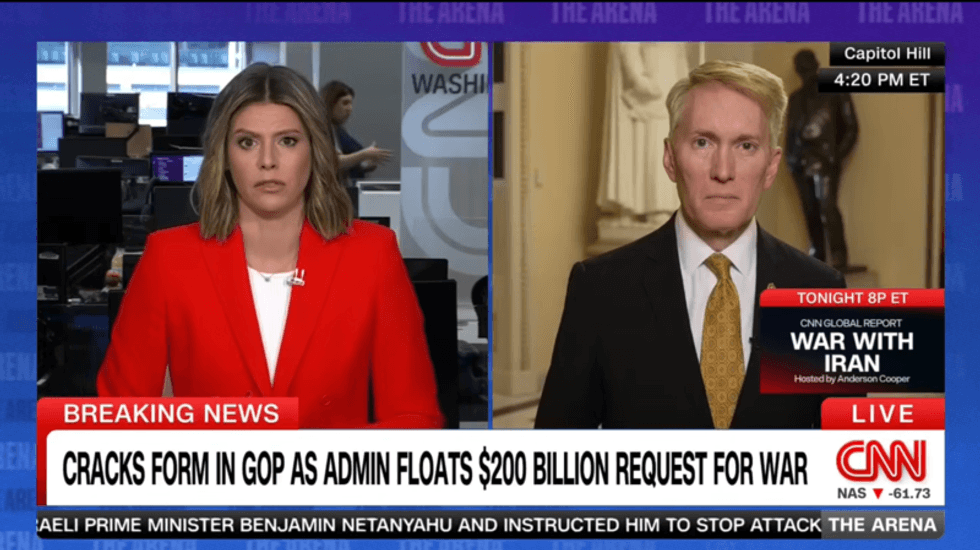
Senate Republican's own words hurled back in his face over Trump's Iran goals
CNN host Kasie Hunt threw a GOP senator's words back in his face on Wednesday over President Donald Trump's continuing war in Iran. Hunt interviewed Sen. James Lankford (R-OK) on her show, "The Arena," about the ongoing war in Iran, which has become a contentious issue for the White House. After two weeks at war, the Trump administration has offered shifting rationales for coordinating a bombing campaign in Iran, and the president's goals for the war seem to be fleeting. During the interview, Hunt reminded Lankford about what he said when the Trump administration abducted Venezuelan dictator Nicolás Maduro last year. She played a clip of Lankford arguing, "If you break it, you buy it," in reference to the impact of the U.S. regime-change operation. "Do you think that's true here in Iran? Did we break it, and have we bought it?" Hunt asked Lankford. "I pray that we have not," Lankford replied. Trump has said he is deploying thousands of troops to Iran as part of the conflict. He is also considering occupying Kharg Island, which is a key part of the Iranian regime's oil export business. Trump has also called on other nations to help the U.S. reopen the Hormuz Strait, which Iran has effectively blockaded for American and Israeli ships since the war began. Only Estonia has said it is ready to talk about the effort.
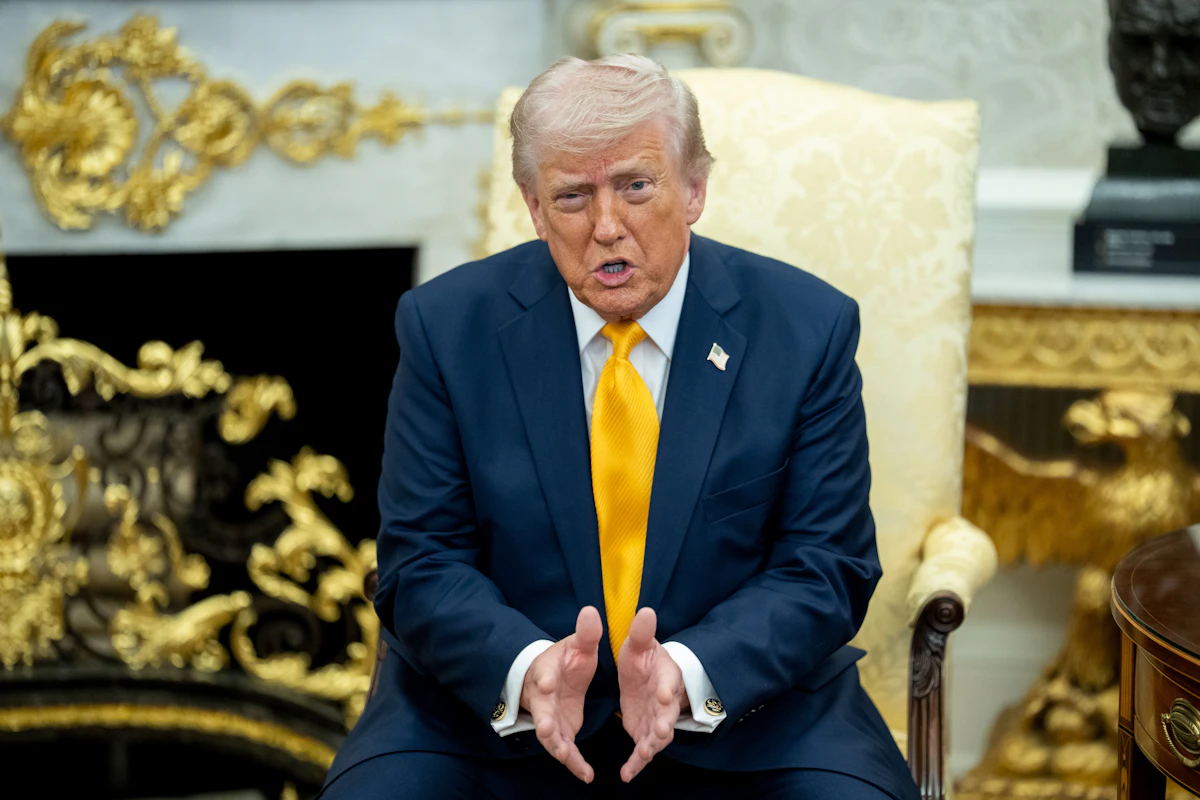
Transcript: Trump Has No Idea How To End the War Against Iran
This is a lightly edited transcript of the March 19 edition of Right Now With Perry Bacon. You can watch the video here or by following this show on YouTube or Substack.Perry Bacon: So I want to start by framing this in maybe a positive way. We’re almost three weeks into this war with Iran. What have we achieved? Any successes? Is there anything you would say is successful here?Matt Duss: We’ve blown up a lot of things. We’ve killed a lot of people—killed a lot of Iranian leaders, including some who, from my understanding, could potentially have helped negotiate an off-ramp and an end to this war. It’s unclear to me that we’ve actually advanced American security at all. I think we’ve done the opposite. Clearly we’ve managed to raise the price of oil. Iran has closed the Strait of Hormuz and threatened shipping through the strait, which raises the price of oil even more. But again, if you ask me what we’ve achieved: the problem is that the Trump administration has not really articulated any clear goals here, other than this nonsensical claim that we’re trying to prevent an Iranian nuclear weapon. Iran was nowhere close to having the capability of producing a nuclear weapon. Our own intelligence services believe that Iran had not decided to pursue a nuclear weapon, even if they were keeping that option open. Unfortunately, I think this war could make that decision for them. So again, you ask what we’ve achieved—I think we’ve achieved, unfortunately, nothing good at all for the American people.Bacon: Even three weeks ago it wasn’t totally clear from the Trump administration why we were doing this at this time. But let me ask: there’s been some reporting that Israel maybe pushed us into it in a certain way. From the Israeli perspective, they may have had actually clear goals—talk about their goals for this war.Duss: Right now, talking about Israel: clearly Israel’s main goal here is to destroy Iran’s ballistic missiles, their missile launchers, their missile manufacturing capacity. This is really what is driving this war right now. And this is something I heard from Israeli officials myself when I was in Israel back in October. Iran was rebuilding its missile capacity much quicker than expected, and that was very concerning, because obviously these missiles are a retaliatory measure across the region—but also particularly in Israel, where they did enormous damage to Israeli military sites and in Israeli cities, far more than was reported, given the very strict censorship of the news in Israel. So I don’t think Americans quite understood how damaging these missiles were.But again, these missiles are a form of deterrence—not to defend the use of missiles launched into cities, which is indefensible. However, Iran sees them as part of its deterrence doctrine: if you attack us, we understand that we cannot face off militarily head-to-head against Israel, and we certainly cannot against the United States. However, we do have the ability to create enormous pain in other ways. This has been part of Iran’s strategic doctrine for a very long time: the use of missiles, and the relationships with militant groups like Hezbollah, Hamas, the Houthis, and militias in Yemen and Iraq, to say that while we cannot prevail in a conventional conflict, we have other ways to raise costs for you. That’s the role the missiles play here.Unfortunately, Israel’s military doctrine—backed by the Trump administration, and originally backed by the Biden administration—is that Israel desires and believes it is now entitled to complete freedom of action across the region. Anything that might constrain Israel’s ability to strike wherever, whenever, and for whatever reason is now seen as an unacceptable and imminent threat. And I just want to say: that is an absolutely insane policy. It’s absolutely insane that the Biden administration supported it—though we should acknowledge that the Biden administration did restrain Israel from attacking Iran, and did restrain it from doing a few things the Trump administration has allowed. Even though the Biden administration obviously gave Israel essentially a free hand to obliterate Gaza and commit a genocide there, which is still ongoing. And the Trump administration has pretty much backed Israel in doing whatever it wants.Bacon: Both the U.S. and Israel wanted regime change—or lack of a better way to put it—and that has also not been achieved, right?Duss: I think clearly the Israelis want regime change. It’s unclear what Trump wants. They’ve said so many different things, and it is in character for Trump to just throw out a bunch of different goals and objectives to see what sticks. A few weeks ago he was literally cold-calling journalists to workshop different goals like he’s in some kind of comedy improv group. Because let’s remember, Trump is first and foremost an entertainer. But this also means that no matter what happens, he can always point to something and say: this is what I wanted to happen.
Left-Leaning Media's Perspective
- Widespread concern that the Trump administration lacks a coherent strategy or clear objectives for the ongoing war with Iran, leading to a perception of being "trapped."
- Emphasis on the war's negative economic impacts, including surging oil prices and significant damage to Middle Eastern energy infrastructure, exacerbated by Iran's closure of the Strait of Hormuz and use of asymmetric tactics.
- Critique that the war has failed to advance American security and may be pushing Iran closer to developing nuclear capabilities, with Israel's specific goals regarding ballistic missiles highlighted as a driving factor.
Transcript: Trump Has No Idea How To End the War Against Iran
This is a lightly edited transcript of the March 19 edition of Right Now With Perry Bacon. You can watch the video here or by following this show on YouTube or Substack.Perry Bacon: So I want to start by framing this in maybe a positive way. We’re almost three weeks into this war with Iran. What have we achieved? Any successes? Is there anything you would say is successful here?Matt Duss: We’ve blown up a lot of things. We’ve killed a lot of people—killed a lot of Iranian leaders, including some who, from my understanding, could potentially have helped negotiate an off-ramp and an end to this war. It’s unclear to me that we’ve actually advanced American security at all. I think we’ve done the opposite. Clearly we’ve managed to raise the price of oil. Iran has closed the Strait of Hormuz and threatened shipping through the strait, which raises the price of oil even more. But again, if you ask me what we’ve achieved: the problem is that the Trump administration has not really articulated any clear goals here, other than this nonsensical claim that we’re trying to prevent an Iranian nuclear weapon. Iran was nowhere close to having the capability of producing a nuclear weapon. Our own intelligence services believe that Iran had not decided to pursue a nuclear weapon, even if they were keeping that option open. Unfortunately, I think this war could make that decision for them. So again, you ask what we’ve achieved—I think we’ve achieved, unfortunately, nothing good at all for the American people.Bacon: Even three weeks ago it wasn’t totally clear from the Trump administration why we were doing this at this time. But let me ask: there’s been some reporting that Israel maybe pushed us into it in a certain way. From the Israeli perspective, they may have had actually clear goals—talk about their goals for this war.Duss: Right now, talking about Israel: clearly Israel’s main goal here is to destroy Iran’s ballistic missiles, their missile launchers, their missile manufacturing capacity. This is really what is driving this war right now. And this is something I heard from Israeli officials myself when I was in Israel back in October. Iran was rebuilding its missile capacity much quicker than expected, and that was very concerning, because obviously these missiles are a retaliatory measure across the region—but also particularly in Israel, where they did enormous damage to Israeli military sites and in Israeli cities, far more than was reported, given the very strict censorship of the news in Israel. So I don’t think Americans quite understood how damaging these missiles were.But again, these missiles are a form of deterrence—not to defend the use of missiles launched into cities, which is indefensible. However, Iran sees them as part of its deterrence doctrine: if you attack us, we understand that we cannot face off militarily head-to-head against Israel, and we certainly cannot against the United States. However, we do have the ability to create enormous pain in other ways. This has been part of Iran’s strategic doctrine for a very long time: the use of missiles, and the relationships with militant groups like Hezbollah, Hamas, the Houthis, and militias in Yemen and Iraq, to say that while we cannot prevail in a conventional conflict, we have other ways to raise costs for you. That’s the role the missiles play here.Unfortunately, Israel’s military doctrine—backed by the Trump administration, and originally backed by the Biden administration—is that Israel desires and believes it is now entitled to complete freedom of action across the region. Anything that might constrain Israel’s ability to strike wherever, whenever, and for whatever reason is now seen as an unacceptable and imminent threat. And I just want to say: that is an absolutely insane policy. It’s absolutely insane that the Biden administration supported it—though we should acknowledge that the Biden administration did restrain Israel from attacking Iran, and did restrain it from doing a few things the Trump administration has allowed. Even though the Biden administration obviously gave Israel essentially a free hand to obliterate Gaza and commit a genocide there, which is still ongoing. And the Trump administration has pretty much backed Israel in doing whatever it wants.Bacon: Both the U.S. and Israel wanted regime change—or lack of a better way to put it—and that has also not been achieved, right?Duss: I think clearly the Israelis want regime change. It’s unclear what Trump wants. They’ve said so many different things, and it is in character for Trump to just throw out a bunch of different goals and objectives to see what sticks. A few weeks ago he was literally cold-calling journalists to workshop different goals like he’s in some kind of comedy improv group. Because let’s remember, Trump is first and foremost an entertainer. But this also means that no matter what happens, he can always point to something and say: this is what I wanted to happen.

The real reason Trump is trapped in Iran
Friends,Yesterday, Trump said that he’d do whatever is necessary to ease the oil crisis. He also assured America that the crisis “will be over soon.”BS.The problem isn’t just that Iran has blocked the Strait of Hormuz. It’s also that Iran, Israel, and the United States have all inflicted — and continue to inflict — serious damage to the oil and gas infrastructure of the Middle East. This damage will take months if not years to repair.At one point on Thursday oil prices jumped to $119 a barrel before falling back to around $111 a barrel — all but guaranteeing that the price of gas at the pump will continue to rise, as will the prices of many other products and services indirectly affected by oil prices.What we are now witnessing is one of the grossest military and political blunders in modern history.It’s not hard to understand why Trump is trapped in Iran. He doesn’t listen to anyone outside his small circle of sycophants who tell him what he wants to hear.But there’s something else. Iran has adopted an asymmetric war strategy that’s working.I’m indebted to Marty Manley for uncovering a fascinating historical fact that sheds light on what Iran is doing. During the Korean War, U.S. Air Force Colonel John Boyd came up with a theory of competitive decision-making that shaped American military doctrine for a generation. He called it the OODA loop: Observe, Orient, Decide, Act.Boyd found that victory doesn’t go to the side with more firepower. It goes to the side that cycles through the OODA loop faster — observing what’s changing, orienting to its meaning, deciding what to do, and acting before its adversary does.Get inside your opponent’s loop, Boyd reasoned, and you don’t just outpace him. You break his ability to form a coherent picture of the war he’s fighting.Manley observes that Iran has adopted Boyd’s approach. Iran hasn’t needed to match American firepower; it’s needed only to generate economic and political problems for Washington that outrun Washington’s ability to orient, decide, and act.Iran has gotten inside Trump’s OODA loop because Iran has responded to U.S. airstrikes by widening the war horizontally — attacking tankers in the Strait of Hormuz, launching drones and missiles at Gulf state oil and gas infrastructure, provoking the U.S. and Israel to destroy even more of that infrastructure, hitting Amazon data centers in the United Arab Emirates and Bahrain (causing regional outages for banking, e-commerce, and cloud services), and squeezing other choke points that the global economy depends on.Iran’s leaders — veterans of asymmetric wars in Iraq and Syria — are applying the same asymmetric logic to Trump’s war. Inexpensive drones, short-range missiles, and sea mines can have the same effect that IEDs had in Iraq — only with far greater strategic impact, because they disrupt global supply chains.What has Washington done? Dropped more bombs and launched more missiles.On Wednesday Israel struck at the crown jewel of Iran’s energy industry — the giant South Pars gas field that Iran shares with Qatar and is by far the largest in the world. (Israel says Trump gave the attack his blessing; Trump says he didn’t.) Iran quickly retaliated with an attack on Qatar’s Ras Laffan Industrial City, the world’s largest liquefied natural gas facility.The attacks have sent the global oil benchmark soaring and prompted a mad scramble in Washington. Trump threatens “to blow up the entirety” of Iran’s South Pars gas holdings if Iran attacks Qatar again. His treasury secretary says the U.S. will consider lifting sanctions on millions of barrels of Iranian oil.Since he and Israel began bombing Iran, Trump’s strategy has been entirely reactive. Iran is generating problems for Washington faster than Washington can contain them — a clear sign that Iran is inside Trump’s OODA loop.Trump and Israel assumed that overwhelming airpower would either compel Iran to surrender or trigger regime change. But neither has happened. The regime seems more entrenched and bellicose than ever.As Iran continues to block the Strait of Hormuz and attacks its Gulf neighbors’ oil and gas infrastructure, the cost-benefit ratio continues to shift against Trump: Economic and political pressures are mounting on Washington faster than they are on Tehran.Sure, Iran is hurting — but, as Manley argues, Iran can sustain its counteroffensive more easily and longer than the U.S. can sustain economic damage to Iran. An Iranian Shahed drone made of styrofoam and powered by a motorcycle engine, for example, costs orders of magnitude less than the precision missiles sent to intercept it or the economic havoc it causes when it ignites a tanker, data center, or desalination plant.In addition, the longer Trump’s OODA loop stays broken, the more bad consequences occur that no one in the Trump regime anticipated.

Trump Says We Won. This Former Rep Says We’re Trapped.
Adam Kinzinger tries to imagine a way out.
Right-Leaning Media's Perspective
- Reports emerged about a former counterterrorism official, Joe Kent, who resigned over the Iran war, claiming he and others were prevented from sharing their concerns with President Trump.
- News of an FBI investigation into the aforementioned former official, Joe Kent, following his public statements regarding his resignation and criticisms of the administration's war strategy.
- President Trump's strong stance, threatening to "finish off" Iran and calling for Asian and NATO allies to assume responsibility for securing the Strait of Hormuz.

Former counterterrorism official says he wasn't allowed to share Iran war concerns with Trump
Joe Kent, the former counterterrorism director who resigned this week over concerns about the Iran war, said Wednesday that he and other senior officials with doubts about the airstrikes "were not allowed" to share them with President Donald Trump.
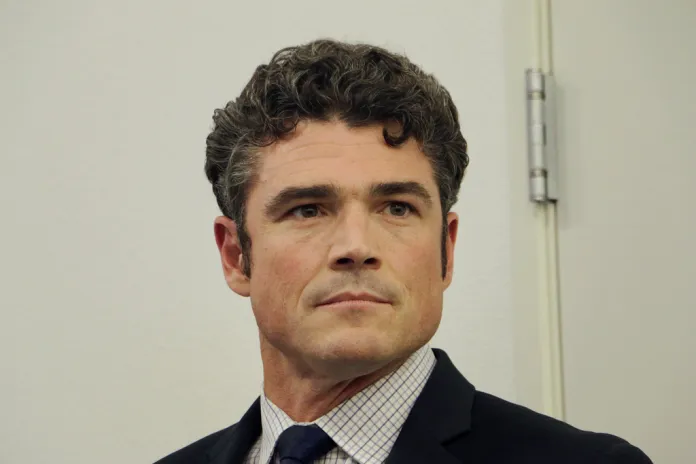
FBI investigating Trump official who resigned over Iran war: What to know about Joe Kent
Joe Kent, the former director of the National Counterterrorism Center, caused a stir when he announced his resignation was directly related to President Donald Trump’s attack on Iran. Since then, the ex-Trump official has started doing interviews to talk about the reasons for his departure and his time spent in the administration. Simultaneously, news reports […]

Trump Threatens to “Finish Off” Iran and Let Asia and NATO “Be Responsible” for the Strait of Hormuz
President Trump seemingly threatened to escalate the war in Iran and leave the Strait of Hormuz, a vital artery where up to 25% of the world’s oil travels through, to other countries that use it for their oil. The post Trump Threatens to “Finish Off” Iran and Let Asia and NATO “Be Responsible” for the Strait of Hormuz appeared first on The Gateway Pundit.